
Gresham's Law
Why we spend the trash and hide the treasure

There is an old adage in economics that sounds like a paradox: “Bad money drives out good”.
To the uninitiated, it suggests that people prefer rubbish. In reality, it is the ultimate testament to human shrewdness. It is called Gresham’s Law, and while it was named after a 16th-century financier to Queen Elizabeth I, its logic is currently tearing through the 21st-century economy with renewed vigour.
The Tudor Origin: Shaving the Sovereign
Sir Thomas Gresham didn’t “invent” the law, but he was the one who had to explain to the Queen why her “fine gold” was vanishing from England. The culprit? The Great Debasement.
Previous monarchs had taken to “shaving” the edges of gold and silver coins or mixing them with base metals like copper while maintaining the same “face value”.
The public, being rational actors, immediately noticed. If you had two coins, one made of pure gold and one made of a cheap alloy, and both were legally mandated to buy the same loaf of bread, which one would you hand to the baker?
The Bad Money: The debased, lighter coin. You spend this as quickly as possible to get rid of it.
The Good Money: The heavy, pure gold coin. You tuck this under your mattress or melt it down.
By mandating that the “bad” money be accepted at the same price as the “good” money, the state effectively subsidised the bad and taxed the good. Consequently, the good money fled the country or entered private hoards, leaving only the “trash” to circulate.
Gresham’s Law in 2026: The Digital Stash
For decades, Gresham’s Law was considered a relic of the “commodity money” era. After all, when all we have is paper fiat, there is no “good” or “bad”, it’s all just paper.
However, the rise of Digital Assets and the return of high inflation have brought the law back from the dead.
1. The Bitcoin Hoard
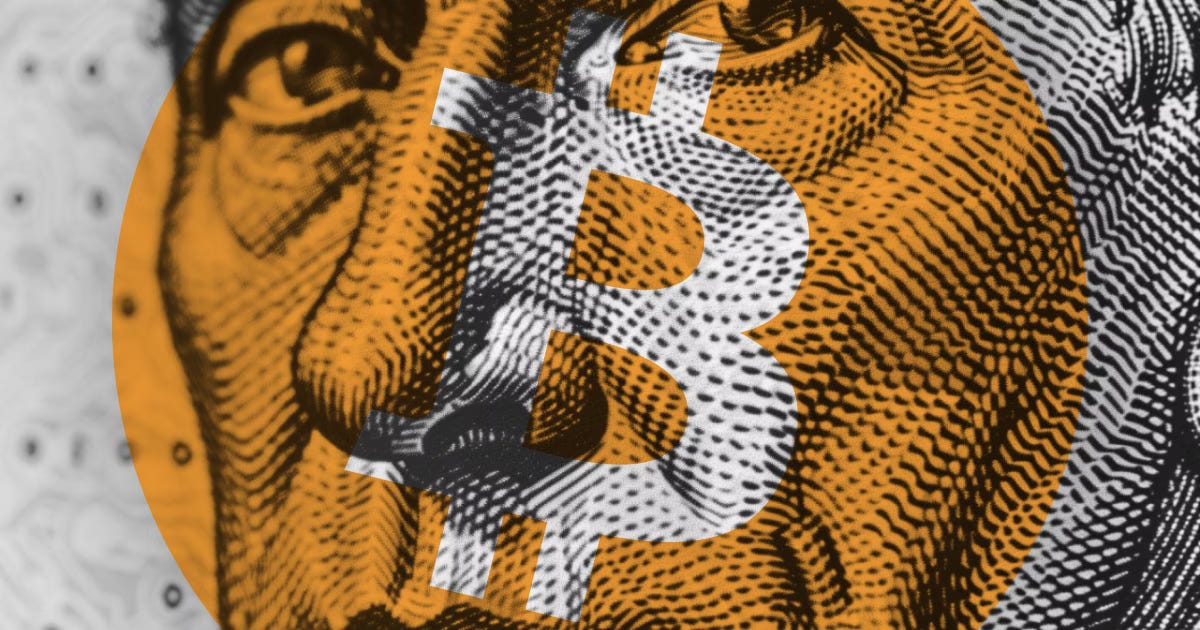
The most glaring modern parallel is the relationship between Bitcoin and the US Dollar. Despite the “currency” in its name, very few people actually spend Bitcoin for coffee. Why? Because they are following Gresham’s Law.
When you hold a devaluing fiat currency (the “bad” money) alongside a hard asset with a fixed supply (the “good” money), you spend the fiat first. You want to get rid of the “melting ice cube” and keep the “digital gold”. As a result, the “good” money (Bitcoin) is hoarded and removed from daily circulation, while the “bad” money (Fiat) continues to circulate as the medium of exchange.
2. The “Nickel” Anomaly
Even in physical coinage, the law is lurking. In recent years, the price of industrial metals like nickel and copper has spiked so high that the metal content in a US nickel or a UK copper coin has occasionally exceeded its face value.
The result? People “harvest” the coins. They are taken out of circulation to be stored in jars or illegally melted down. Once again, when the “intrinsic” value exceeds the “legal” value, the money vanishes.
The Reverse: Thiers’ Law
There is a terrifying flip side to this coin. Gresham’s Law only works as long as the state can force you to accept the bad money (Legal Tender laws).
If the “bad” money becomes so worthless that people refuse to accept it at any price, as seen in hyperinflationary collapses like Zimbabwe or Venezuela, the law reverses. This is known as Thiers’ Law: Good money drives out bad. When the local currency is “trash”, people stop spending it and start demanding “good” money (USD or stablecoins) for their goods. The bad money doesn’t just circulate; it dies.
The Final Word
We are currently in a massive “Gresham Phase”. Central banks are debasing the purchasing power of fiat at a rate that makes the Tudor monarchs look like amateurs.
Whether it is gold, silver, or Bitcoin, the “good stuff” is being pulled off the table and locked in vaults. We are being left with a circular economy of “bad money” that no one wants to hold for longer than a heartbeat.
History teaches us that you can mandate the value of a coin, but you cannot mandate the trust of the person holding it.