
The Fourth Horseman
Why the American Banking System is Primed to Break

The inevitable geometry of the credit cycle suggests 2026 is the year the music finally stops.
Three times in the last century, the American financial architecture has suffered a catastrophic failure following an identical, remorseless pattern. In each instance, the warnings were visible months before the collapse. In each instance, the public were assured by the “experts” that the situation was contained. And in each instance, the cycle played out with devastating precision.
October 1907. October 1929. September 2008. These dates are not merely historical footnotes; they are markers of a recurring fever. Today, as debt levels reach heights that defy gravity, the same four-stage mechanics that governed those collapses are active once more. This is not speculation; it is simple pattern recognition.
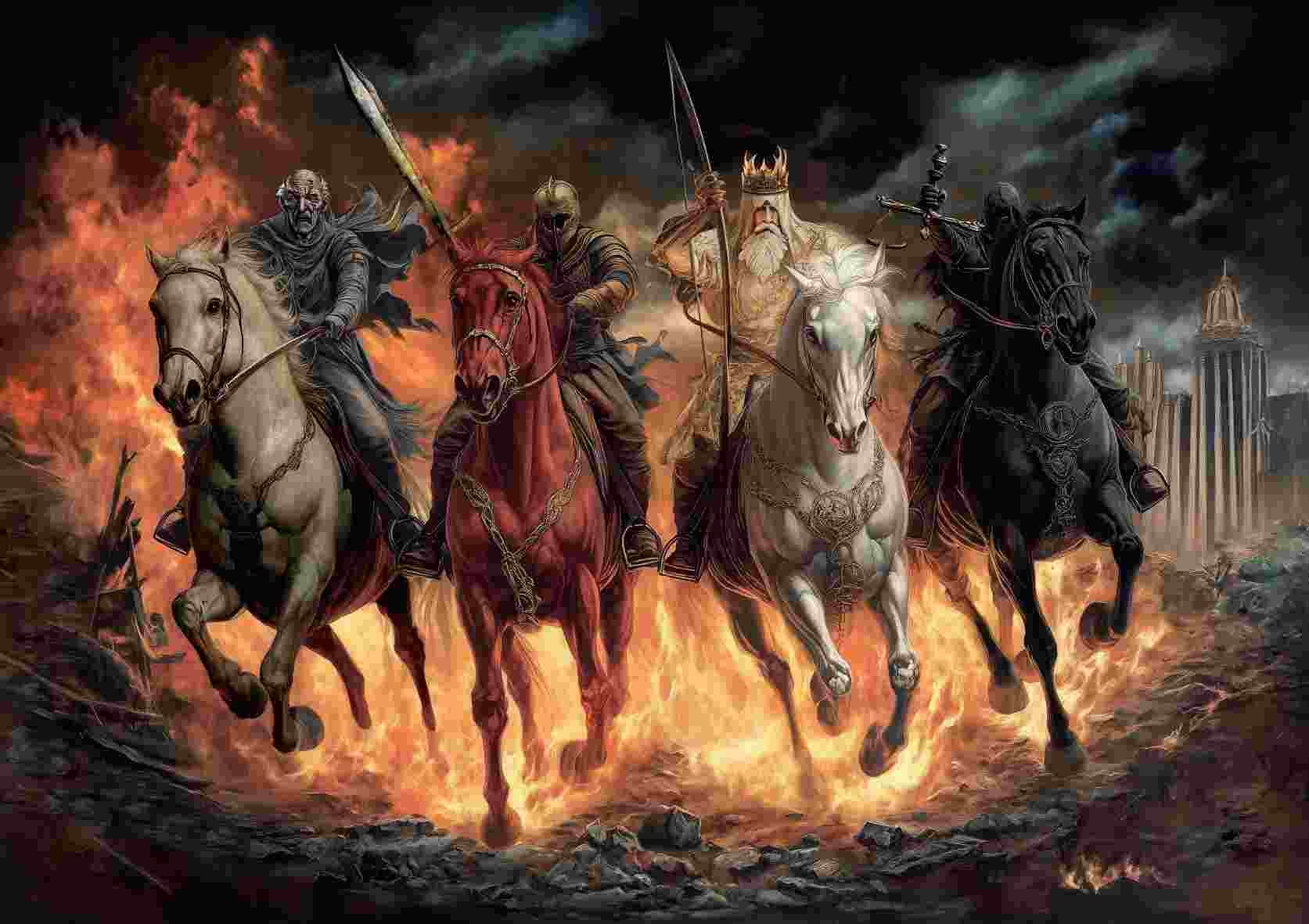
The Four Stages of the End
To understand the current fragility, one must understand the anatomy of a crash. The financial system does not break at random; it evolves toward fragility through four distinct stages.
Stage One: The Great Expansion The cycle begins in an era of cheap money. Interest rates are suppressed, credit is abundant, and confidence is absolute. Banks extend loans to increasingly marginal borrowers. Asset prices rise, not because of productivity, but because of the sheer volume of borrowed money flowing into the market. This leverage creates its own momentum, as rising prices “validate” the initial bad lending.
Stage Two: The Peak of Euphoria Valuations reach levels that ignore historical reality. Lending standards evaporate because the “fear of missing out” on profits outweighs the fear of loss. Borrowers take on debt they cannot hope to service through income, relying instead on the “greater fool” theory, the hope that the asset can be sold to someone else at a higher price later. The system becomes a house of cards, hypersensitive to the slightest breeze.
Stage Three: The Trigger Something breaks the spell. In 1907, it was a botched copper speculation. In 1929 and 2022/23, it was the central bank raising rates to curb the very monster they created. The trigger varies, but the result is a sudden, violent contraction of credit. Suddenly, everyone realises the Emperor has no clothes, and no cash.
Stage Four: Systemic Panic The contraction becomes self-reinforcing. Falling prices lead to bank losses; bank losses lead to less lending; less lending leads to even lower prices. Trust, the only real currency in banking, evaporates. The speed of the 1907 panic was measured in days; in 2008, the global system nearly dissolved in 72 hours.
The Maturity Wall of 2026
We are currently transitioning from Stage Two to Stage Three. The “easy money” era of 2009-2021 is over. The Federal Reserve’s aggressive rate hikes in 2022 and 2023 were the catalyst. We have already seen the first tremors: the collapse of Silicon Valley Bank and First Republic in 2023. These were not isolated incidents; they were the first leaks in the dam.
The real danger lies in the “Maturity Wall”, specifically for real estate. These loans were signed when rates were on the floor and office buildings were actually occupied. Refinancing these debts at 7% interest while property values have cratered by 40% is a mathematical impossibility for many.
A Different Kind of Crisis
While the pattern remains the same, the tools to fight it are blunt. In 2008, the US national debt was a fraction of what it is today.
Furthermore, the political appetite for “bailing out the bankers” has vanished. Public trust in institutions is at an all-time low. If the system seizes in 2026, the intervention required will need to be larger than TARP and the 2020 stimulus combined, yet the government’s ability to fund such a rescue is hamstrung by its own interest payments.
The clock is ticking. History does not repeat, but it rhymes with a haunting rhythm. The debt is unprecedented, the trigger has been pulled, and the four-stage cycle is nearing its conclusion. The only question remains: are you prepared for the silence when the music finally stops?