
The Illusion of Building Back Better
Why Government Reconstruction Schemes Are Doomed to Fail

The phrase “Build Back Better” entered the political lexicon with considerable fanfare during the early 2020s. Promoted as a forward-looking response to the disruptions of the COVID-19 pandemic, it encapsulated the ambition of major Western governments, particularly in the United States under President Joe Biden, to reshape economies and societies along preferred lines. Far from a mere recovery plan, it represented an expansive vision of state-directed transformation: substantial investments in green energy, expanded social programmes, infrastructure upgrades, and equity initiatives intended to create a more resilient, inclusive, and sustainable order.
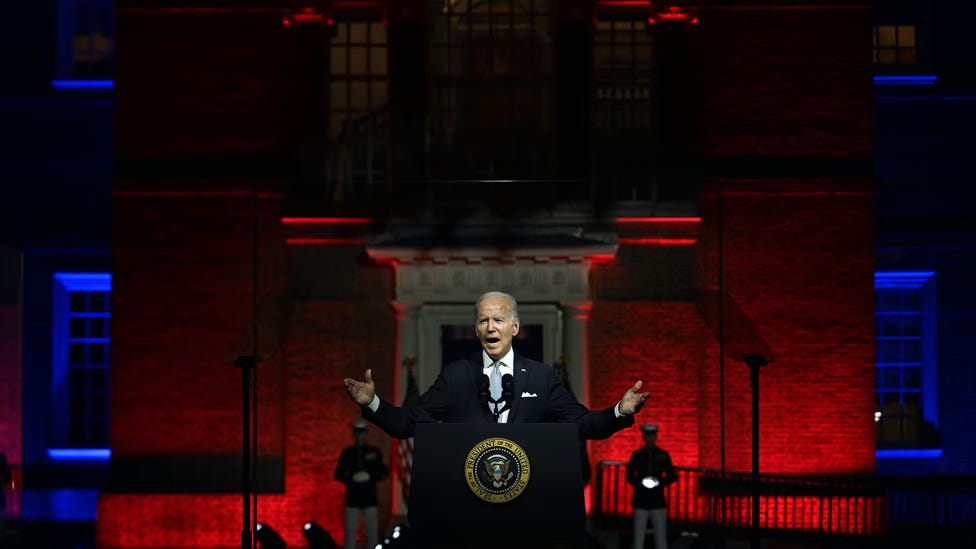
In practice, the Build Back Better agenda manifested in legislative proposals such as the Build Back Better Act, a multi-trillion-dollar package emphasising climate measures, childcare, healthcare expansions, and tax adjustments on higher earners and corporations. Proponents argued that these measures would generate jobs, lower long-term costs for families, and address structural weaknesses exposed by the pandemic. The underlying premise was that crises offered opportunities for deliberate, centralised improvement rather than simple restoration of prior conditions.
Yet the initiative encountered significant obstacles and ultimately fell short of its transformative promises. Scaled back through congressional negotiations and partially supplanted by the Inflation Reduction Act, the full scope of Build Back Better failed to materialise as envisioned. Implementation challenges, combined with broader economic pressures, revealed the limitations of such grand designs. Inflation surged in the period following related spending measures, reaching multi-decade highs that eroded real wages and household purchasing power. Public debt continued its upward trajectory, with analyses projecting substantial additions to deficits even under optimistic assumptions.
Critics, including economic modellers from institutions such as the Tax Foundation, highlighted potential drags on long-run growth, including reduced output and employment from tax increases and regulatory burdens. While short-term consumption effects were debated, the persistent rise in prices for essentials such as energy, housing, and groceries underscored a disconnect between stated intentions and observable results. Far from building a stronger foundation, the approach contributed to an environment of heightened uncertainty and diminished confidence in institutional competence.
This pattern is not anomalous. Similar government-led reconstruction efforts have repeatedly demonstrated structural vulnerabilities. Post-crisis interventions often amplify distortions by injecting liquidity and directing resources according to political priorities rather than market signals. Bureaucratic allocation tends to favour connected interests, overlook local knowledge, and generate unintended consequences, such as misaligned incentives or resource misallocation. The information problem inherent in central planning, as long recognised in economic thought, renders governments ill-equipped to orchestrate complex societal adjustments efficiently.
Moreover, expansive spending programmes frequently exacerbate the very fragilities they purport to resolve. Elevated public expenditure, financed through borrowing or monetary accommodation, fuels demand pressures without commensurate supply-side enhancements. Regulatory overlays intended to promote favoured sectors, such as renewable energy transitions, can constrain conventional production, contributing to volatility in prices and availability. The result is a cycle wherein short-term palliatives mask deeper imbalances, setting the stage for subsequent interventions.
The recurring rhetoric of “building back” invites a more fundamental question: why must societies perpetually reconstruct after avoidable disruptions? Sound governance should prioritise resilience through prudent policies that minimise the frequency and severity of crises. This entails maintaining fiscal discipline, avoiding excessive monetary expansion, preserving market mechanisms for resource distribution, and refraining from overreach that distorts incentives. Constant crisis management reflects a failure of prevention, where policymakers address symptoms while perpetuating underlying weaknesses, such as unsustainable debt accumulation or regulatory complexity.
Historical experience across jurisdictions reinforces this assessment. Initiatives promising equitable growth through state orchestration have often yielded higher costs, slower adaptation, and concentrated benefits for select groups. Private enterprise, by contrast, responds dynamically to signals of scarcity and preference, fostering innovation and efficiency absent in politicised frameworks. The persistent turn to reconstruction narratives signals not strength in government action but a reluctance to confront the limitations of interventionist models.
In conclusion, Build Back Better exemplified the enduring appeal of ambitious statecraft while illustrating its practical shortcomings. Inflationary pressures, fiscal strain, and unfulfilled economic gains highlighted the difficulties of engineering superior outcomes from above. Comparable schemes will likely encounter analogous fates, driven by the same informational and incentive constraints. True progress demands a shift in orientation: away from perpetual rebuilding and toward the cultivation of systems that fail less often in the first instance. Stability arises not from repeated resets but from policies that respect the boundaries of effective governance and empower individual and entrepreneurial initiative. Only by recognising these realities can societies hope to achieve durable advancement rather than cyclical disappointment.
more vs better and feed the institutions that already exists versus conceive new ones is always chosen because that's the only way the grifters know who to pay