
The Quantum Loom
BIP-360: Weaving a Shield for Bitcoin

In the quiet corners of the Bitcoin GitHub repository, a new document has appeared. It is not a flashy marketing deck or a manifesto on the “flippening”, but rather a technical blueprint titled BIP-360. To the uninitiated, it looks like a dry collection of script modifications; to those watching the horizon, it is the first serious attempt to build a lifeboat before the iceberg of quantum computing hits the hull.
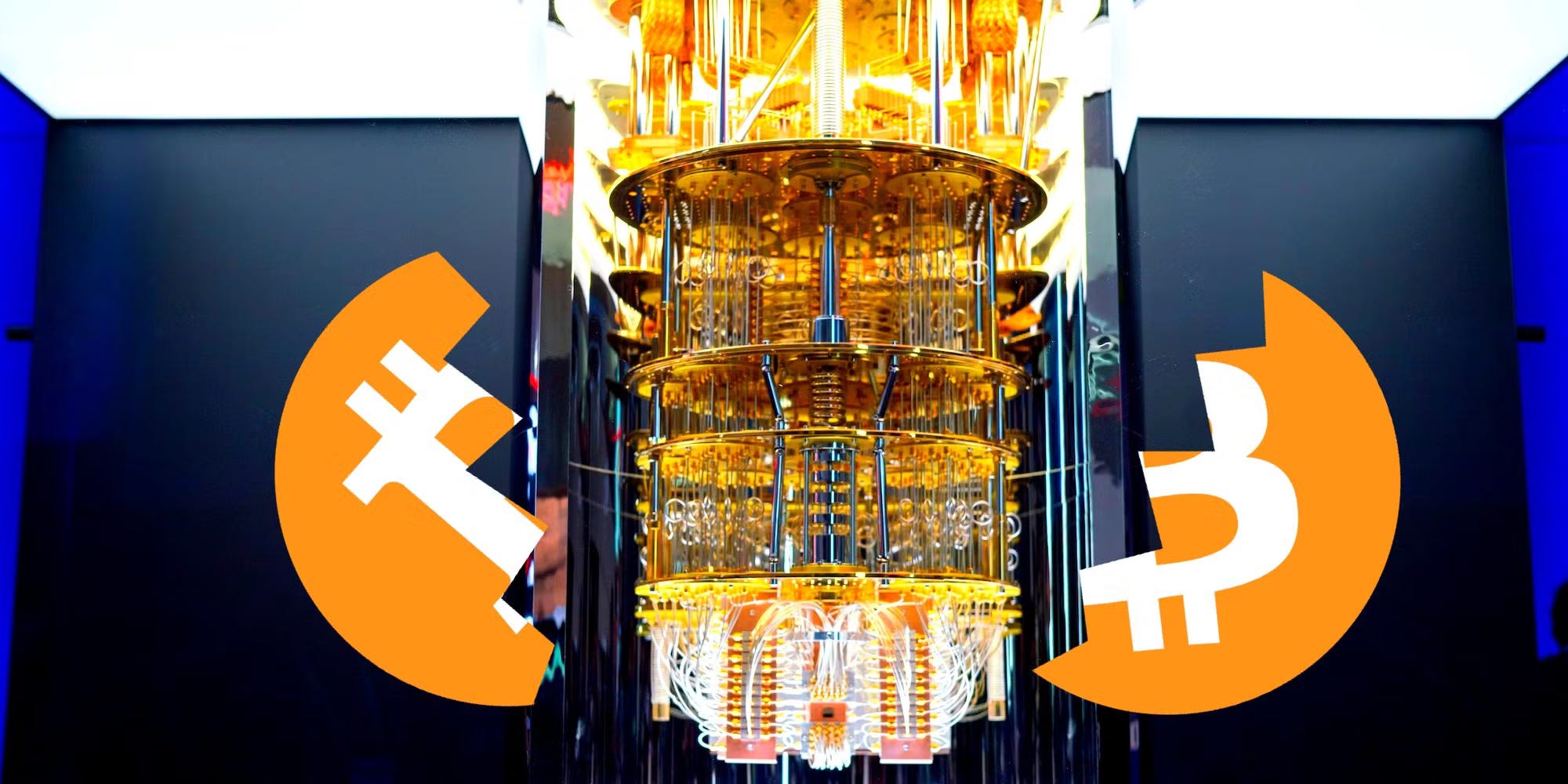
The threat is no longer purely science fiction. As we move deeper into 2026, the gap between “theoretical risk” and “engineering reality” is narrowing. The danger lies in the very maths that makes Bitcoin possible: Elliptic Curve Cryptography (ECC).
The Vulnerability of the Open Secret
Bitcoin’s security relies on a simple premise: it is easy to multiply two numbers together to get a result, but nearly impossible to do the reverse. However, Shor’s Algorithm, a mathematical procedure designed specifically for quantum computers, turns this logic on its head. A sufficiently powerful quantum machine could look at a public key on the blockchain and, within minutes, calculate the private key required to spend the funds.
The risk is most acute for what developers call “long-exposure” funds. These are addresses where the public key is already visible to the world. This includes:
Legacy P2PK addresses: Common in the early days (including Satoshi’s original coins).
Reused addresses: Every time you spend from an address, you reveal the public key. If you leave change behind in that same address, it is now “exposed.”
Taproot outputs: Ironically, Bitcoin’s newest and most advanced address type reveals its public key by default, making it a prime target for a quantum-enabled thief.
Enter BIP-360: Pay-to-Merkle-Root (P2MR)
BIP-360, authored by a trio of developers including Hunter Beast and Ethan Heilman, proposes a new output type called Pay-to-Merkle-Root (P2MR). It is a subtle but profound shift in how Bitcoin handles its “locks”.
In the current Taproot system, there is a “key-path” that allows for a quick spend using a standard public key. BIP-360 effectively saws off this path. Instead of committing to a public key that a quantum computer could eventually crack, P2MR forces the user to commit to a Merkle Root of scripts.
The genius here is twofold. First, it hides the public key behind a hash function (which is much harder for quantum computers to break via Grover’s Algorithm) until the very moment the user decides to spend. Second, it creates a “blank canvas” within those scripts. Because the output is just a root of possible conditions, developers can later introduce Post-Quantum (PQ) signatures, like ML-DSA or SLH-DSA, without needing another massive protocol overhaul.
Will It Fix the Problem?
Technically, BIP-360 is an elegant “first layer” of defence. It provides a safe haven for “cold storage”, allowing users to move their funds into a format that keeps their public keys hidden from the quantum gaze.
However, it is not a silver bullet. The proposal notably fails to address the “mempool attack”. When you broadcast a transaction to spend your Bitcoin, you must reveal your key to prove ownership. In that window, the 10 to 60 minutes it takes to confirm a block, a quantum attacker could see your key and “front-run” you, sending a competing transaction with a higher fee to steal your funds before your legitimate one settles. Solving this requires larger, more complex signatures that the current Bitcoin network isn’t quite ready to swallow.
The Consensus Conundrum: Will It Pass?
In the fractious world of Bitcoin development, BIPs live and die by consensus. The current climate for BIP-360 is cautiously optimistic but far from a guaranteed win.
The Case for Adoption:
Institutional Pressure: As of 2026, major ETF providers and institutional holders like BlackRock are reportedly beginning to ask questions about “Q-Day”. A lack of a quantum roadmap could cap institutional inflows.
Minimal Disruption: Because it is a soft fork and doesn’t force anyone to move their coins, it is less controversial than more “activist” proposals.
The Hurdles:
The “Not Today” Crowd: Stalwarts like Adam Back have historically argued that the threat is decades away. There is a strong “if it ain’t broke, don’t fix it” sentiment that resists any increase in code complexity.
The Signature Size: True quantum resistance requires signatures that are 10 to 50 times larger than what we use today. This would eat up block space and potentially drive up transaction fees, a trade-off many users aren’t ready to make until the threat is literal rather than linear.
The Verdict
BIP-360 is likely to be merged and eventually activated, but not because of a sudden wave of “quantum panic”. It will pass because it is a low-cost insurance policy. It doesn’t “solve” quantum computing, but it buys Bitcoin the one thing it needs most: agility. By establishing the P2MR format, the network prepares the ground for the heavier cryptographic lifting that will surely be required by the end of the decade.
The BIP will pass, but the migration will be slow. The real drama won’t be in the code, but in the social layer: deciding what happens to the millions of “zombie” coins (including Satoshi’s) that cannot or will not migrate to this new, safer shore.